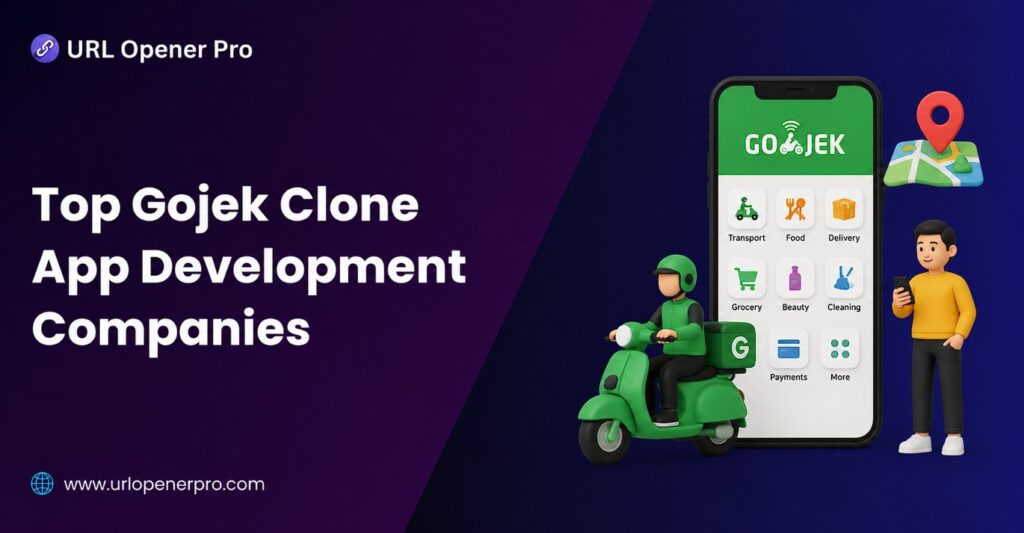
The super app race isn’t slowing down. What started as a way to bundle a couple of services into one download has become a full-blown business category, and 2026 is shaping up to be the year a lot of entrepreneurs finally pull the trigger. The maths is simple enough: building a multi-service platform brick by brick can burn through a year and a small fortune, whereas licensing a ready Gojek clone script gets you to launch in weeks. That shift in economics is exactly why picking the right development partner has become such a make-or-break decision, and it’s what this list is here to help with.
The Super App Logic, Explained Without the Jargon
Think about how many apps sit on the average phone doing overlapping jobs. One for cabs, one for lunch, another for groceries, a fourth for sending a parcel across town. The whole premise of a Gojek-style platform is to collapse that clutter into a single interface where a user books a ride, orders dinner, and pays a bill without ever switching screens. For the person running the business, that translates into a shared wallet, one login, and a customer who has very little reason to wander off to a competitor.
Why does 2026 matter specifically? A few things have lined up at once. Payment rails in emerging markets have matured, delivery fleets are easier to onboard, and buyers now expect polished experiences out of the box. A capable Gojek clone script rolls all of that into a foundation you can brand and scale, instead of a science project you have to babysit.
Before You Sign Anything, Weigh These Things
Choosing a vendor is less about who has the flashiest website and more about what you actually walk away owning. A few dimensions deserve real scrutiny before money changes hands.
First is code ownership. Some providers hand you a licence and keep the keys; others give you the full source outright. That distinction shapes everything you can do later. Second is how deep the customisation goes, because a platform that only lets you swap a logo will feel like a cage the moment your business grows and needs features to create social media posts at scale. Third is what happens after launch, since bug fixes, server hiccups, and OS updates don’t stop just because the app went live.
Pricing transparency matters too. Hidden per-transaction fees or vague “support packages” have a way of quietly eating margins. And finally, look hard at the portfolio, because a polished demo is easy to fake but a track record of live, funded products is not. For brands that want genuine independence, going with a white label Gojek clone app is usually the smarter route, since it hands over control of the branding, the code, and the roadmap rather than renting it back to you.
Top 10 Gojek Clone App Development Companies in 2026
Every company below earns its place for different reasons. Some win on engineering depth, others on price or regional muscle. Here’s the rundown.
1. Elluminati
Elluminati sits at the top of this list for a reason that goes beyond marketing polish: they’ve been shipping on-demand platforms long enough to have seen where these projects tend to break. Their white-label Gojek clone app ships with source code handover, a genuinely modular architecture, and a service catalog that extends well beyond the usual ride-and-food combo into on-demand handyman, pharmacy, and courier flows. What tends to win buyers over is the balance they strike between a mature, tested codebase and the freedom to reshape it. If you want a platform you can grow into over five years rather than outgrow in one, they’re the safe first call.
2. V3Cube
One of the most established names in the space, V3Cube has spent over two decades building white-label on-demand products and has shipped clone apps across markets like the USA, Germany, South Africa, the UK, and Malaysia. Their multi-service build bundles taxi booking, parcel sending, store deliveries, and a stack of on-demand professional services under one roof, and they lean on rapid two-week deployment as their main selling point. A solid pick for founders who want a proven, globally tested script rather than an experiment.
3. Apptunix
Apptunix approaches super apps from a custom-engineering angle rather than a template-first one. They handle the full arc from idea validation and UI/UX through development, launch, and ongoing support, folding in AI, real-time tracking, and multi-service integration along the way. Best suited to businesses that want a heavily tailored platform and are willing to invest in getting the details right.
4. Trioangle
Trioangle has built a reputation on transparency and after-launch reliability. Their multi-service offering reaches beyond the standard ride-and-food pairing into a wider service catalogue, backed by a clear fee structure and dependable post-deployment support. A comfortable choice for owners who value a clean pricing model and full customisation of branding and workflow.
5. SpotnRides
SpotnRides puts AI at the centre of its pitch. Their white-label multi-service platform threads intelligence through the core operational layers, dispatching, dynamic pricing, routing, with extras like voice-based ordering and integrated chatbots. Naturally suited to entrepreneurs who plan to start with ride-hailing and fan out into food, grocery, and courier over time.
6. Hyperlocal Cloud
Hyperlocal Cloud is the specialist of the group, focused squarely on on-demand and hyperlocal business models. Their white-label solution spans payments, food delivery, logistics, and more, padded out with practical touches like call masking, stock alerts, a kiosk app, and estimated travel times. The right fit when your model is rooted in a specific local market rather than a sprawling global footprint.
7. Suffescom Solutions
Suffescom carves out a distinct lane by weaving Web3 and decentralised finance into the super app model. Their use of blockchain for fare transparency and secure reward systems appeals to brands operating in markets where digital trust and security carry real weight. A forward-leaning option for businesses that want to differentiate on innovation rather than compete on price.
8. 75way Technologies
75way is the engineering-heavy choice, known for high-concurrency backend systems designed to strip out latency. Their platform is built to hold steady under massive, simultaneous demand, which makes them a natural partner for ventures targeting dense, hyper-active metro markets. Lean code and robust server infrastructure keep the app stable even when traffic peaks.
9. Techugo
Techugo blends custom mobile development with super app ecosystem expertise, helping businesses assemble high-performance Gojek-style platforms on modern technology stacks. Their strength lies in shaping the product around specific business goals rather than handing over a fixed mould. A reasonable pick for teams that want both flexibility and a partner with broad app-development range.
10. Quickworks
Quickworks rounds out the list as the budget-conscious, startup-friendly entry. With pricing pitched at the accessible end and a focus on getting early-stage founders to market without a heavy upfront outlay, they’re well positioned for anyone testing a business idea before committing to a larger build. Sensible defaults and a gentle on-ramp lower the barrier for first-timers.
Read also: Top 5 Productivity Tools
Turning a Shortlist Into a Decision
Once you’ve narrowed things to two or three names, the real work begins. Book live demos rather than watching pre-recorded ones, because a canned video hides the rough edges. Ask directly whether full source code is included and get the answer in writing. Dig into client reviews that live outside the vendor’s own testimonials page, and press on the long-term upgrade path, since a platform that can’t evolve becomes dead weight fast. Clean, well-documented code and a clear roadmap are the quiet signals that a provider actually intends to stand behind what they sell.
What It All Costs in 2026
Pricing swings widely, and anyone quoting a single flat number is glossing over the variables. The count of services you switch on moves the figure. So does the spread of platforms, whether you need iOS, Android, and web or just one of them. Custom features stack on top, and the licensing model, one-time purchase versus recurring, changes the long-run total more than most buyers expect. As a rough shape: entry packages for a lean, single-region launch sit at the affordable end, mid-tier multi-service builds occupy the middle, and heavily customised enterprise deployments run considerably higher. The honest advice is to map your feature list first, then ask for a quote against it, rather than shopping on headline price alone.
Final Thoughts
Strip away the feature lists and the pricing tables, and the single biggest lever on whether your venture succeeds is the partner you build it with. A capable team gives you a foundation that bends as your business grows; the wrong one leaves you patching cracks you didn’t know were there. Weigh ownership, support, and scalability above the surface-level shine, and lean toward a solution that gives you real control rather than a rented shell. Get that choice right, and the technology quietly does its job while you focus on the business.
FAQs
How long does it take to launch a Gojek-style app?
With a ready base, most straightforward builds go live in a few weeks. Heavy customisation stretches that timeline, sometimes to a couple of months, depending on how far you deviate from the core product.
Is the source code usually included?
It depends entirely on the vendor. Some include full source, others licence it. Always confirm this in writing before signing, because it dictates what you can change later.
Can the platform handle both single-vendor and multi-vendor setups?
Most mature solutions support both, letting you run a single business or an open marketplace of providers. Confirm the specific model matches your plan during the demo.
How much customisation is actually possible?
That varies by provider. The better ones treat the base as flexible and let you reshape flows, add services, and rebrand fully, while lighter offerings limit you to cosmetic tweaks.